

UK public debt levels aren’t the core issue concerning bond markets; rather, they are concerned that failure to tackle low productivity growth and inflation and backloading fiscal consolidation, will require persistently higher interest rates which in turn undermine long-term growth. Dimitri Zenghelis calls for a credible, growth-focused strategy—centred on better investment and a coherent, less distortionary tax system—to restore confidence and reduce the premium the UK pays on its debt.
UK public sector debt is nearing 100% of GDP, levels last seen in the late 1950s. It is now widely asserted that bond markets are concerned about the sustainability of UK public debt.
But what is “the bond market”, how ‘concerned’ is it, and what exactly is it ‘concerned’ about? Bond market participants encompass a diverse range of views. But market sentiment is captured in the price of government bonds. Government bonds are IOUs so the price investors will pay for them today depends mainly on the expected path of short-term interest rates (adjusted for inflation) and any risk of default.
The markets have no reason to be concerned about the basic fiscal facts in the UK. The ratio of UK public debt to GDP is relatively low by G7 standards, the UK’s primary fiscal deficit is middle-of-the-pack, and the government is committed to fiscal rules designed to bring it down further. Debt dynamics in the US and France are far more worrying.[1] Yet, at 4.6%, UK 10-year yields remain the highest in the G7 (and close to their peak during Liz Truss’s premiership), making fiscal consolidation harder. So what is troubling the bond markets?
First, debt sustainability is not about the level of debt per se, but about public sector net worth. If liabilities finance assets that generate sufficient returns, debt is sustainable. But UK public net worth appears low by international standards, after decades of public underinvestment.
Still, public debt is ultimately a claim on future taxpayers. UK households—whose median wealth per adult is the highest in the G7—could, in principle, comfortably backstop the debt through higher taxes in future, even if growth is modest. So the possibility of default—which might be relevant for some counties—is not a genuine risk for the UK.
Macroeconomic implications are the markets‘ core concern
Markets are more pointedly focused on the impact of low UK productivity growth, and excess demand, on inflation. Low productivity constrains tax revenues now and in future, and raises the risk that public spending plans cannot be funded through taxation. If public borrowing rises to fill the gap, aggregate demand would increase, but an inflexible, under-capitalised economy could not expand supply quickly enough to avert inflationary pressure. Backloading fiscal consolidation also sustains near-term demand. The Bank of England is charged with keeping inflation in check, and to do this it would be expected to keep interest rates higher for longer. Higher expected future policy rates reduce the attractiveness of bonds, lowering their price until expected yields match alternative returns.[2]
The result, given the absence of spare capacity in the economy, would be the crowding out of private investment, with further negative implications for productivity growth. Higher taxes or lower spending would alleviate this danger, but the political calculus is making this path less likely.
This logic explains why markets reacted badly when the government ditched its widely touted plans to raise income tax rates and instead reaffirmed its manifesto pledge not to raise the main revenue-raising taxes. Although the planned “smorgasbord” of targeted taxes – as trailed in the media – is intended to raise up to £30bn to balance the current budget by 2029/30 and meet the fiscal rules, it is likely that many market participants judged that the composition of the measures could undermine potential growth and increase pressure on inflation and interest rates.
Some proposed tax reforms, such as modernising the UK’s outdated property tax system, could raise revenue without harming growth. But others are more distortionary and damaging. Taxing salary-sacrifice pensions raises labour costs and discourages saving, undermining investment. Narrower-based taxes concentrate the burden on businesses, savers, and investors already hit by last year’s Budget, further discouraging capital formation and productivity growth.
Relying on freezes to tax thresholds amounts to taxation by stealth. These measures increase complexity in one of the developed world’s most convoluted tax systems, characterised by cliff-edges, loopholes and exemptions that distort incentives. Broad-based, transparent taxes are economically less damaging than narrow, opaque ones.
A related concern is that whereas the planned income tax rise would have kicked in quickly, the alternative plans will only generate extra revenue towards the end of the parliament. The extra borrowing and demand in the interim will add upward pressure on interest rates.
Reinstating the abandoned plan for broad based tax increases, would be a start. Overhauling the tax system to remove, not add to, small distorting taxes would also be welcome. Not just income tax, but also VAT, with its multiple loopholes and exemptions (the price shift need not ignite inflation). The government must also consider serious options for long term welfare and pension reform.
It’s the politics
When the Chancellor initially showed willingness to revisit the manifesto, she signalled a readiness to make tough decisions in the national interest. The subsequent reversal, with the political discussion widely leaked for the past few weeks, has fuelled concerns that fiscal choices are being driven by internal party pressures rather than a coherent growth strategy. This dynamic can fuel a vicious cycle: lower productivity growth makes it harder for politicians to make the case for ‘living within its fiscal means’, which in turn undermines private investment and productivity growth.
What unsettles the bond market, therefore, is not the level of UK public debt nor the application of the fiscal rules per se. It is doubt about the UK’s ability to grow without requiring persistently high interest rates, and about whether the government has both a credible and coherent strategy to raise productivity and the political resolve to see it through. Until those doubts are dispelled, the UK is likely to continue paying a premium on its national debt.
[1] Though the US debt is backed by the world’s reserve currency, and France’s debt is backed by the ECB, which can if necessary spread the claims across the euro area.
[2] Specifically, they must at least offer a return equal to the average of what the Bank offers over the relevant time period (plus a ‘term premium’ to reflect the length of time over which money is tied up in the bond). in the bond).
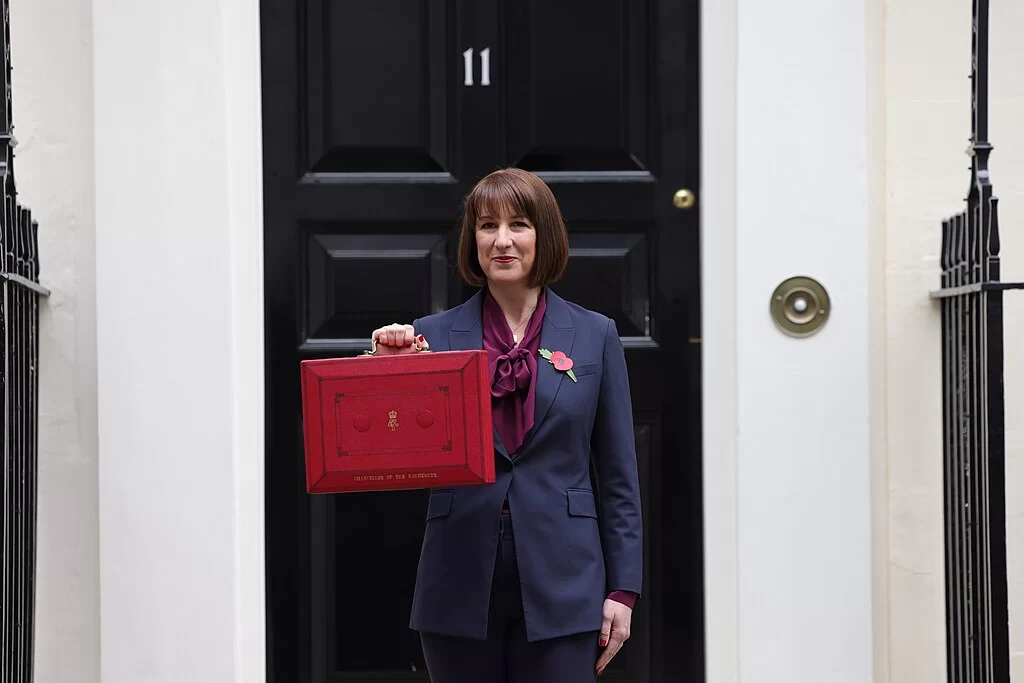
Image: 30/10/2024. London, United Kingdom. Chancellor Rachel Reeves delivers the Autumn Budget 2024. This file is licensed under the United Kingdom Open Government Licence v3.0.
The views and opinions expressed in this post are those of the author(s) and not necessarily those of the Bennett School of Public Policy.


