The context for delivering inclusive economic growth in our regions could hardly be more uncertain. It means that cities, regions, government and investors must work more closely together – using devolution to integrate investment, building the competitiveness of our unique sectors and ‘harnessing the politics of belonging’ to deliver change for communities and places, writes Dr Henry Kippin, Chief Executive of the North East Combined Authority.
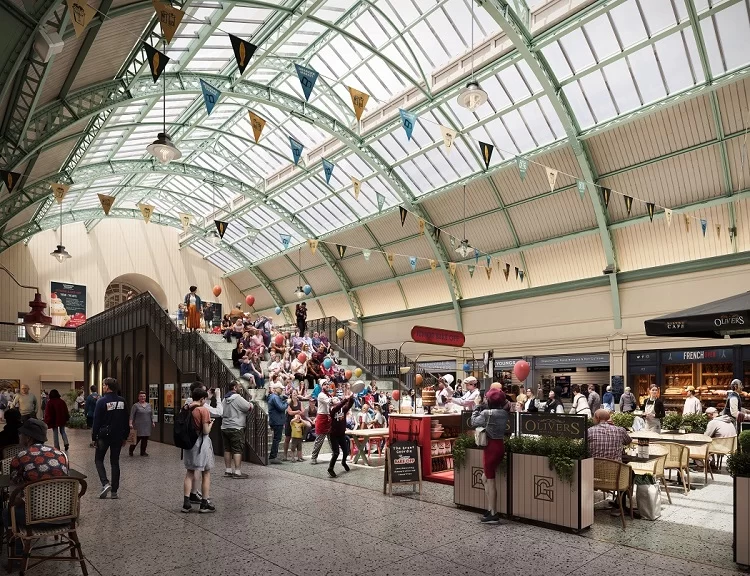
Newcastle’s Grainger Market has been beloved of shoppers and browsers of all ages since 1835 – serving up everything from pigs cheeks, replacement buttons, hipster bagels and string vests. It is a historical ever-present of North East life that is ironically just as important to its modern economy as ever.
Wedged between a replacement battery store and a greengrocer is a stall called Geordie Gifts – selling cards, t-shirts and mugs (amongst other things) branded with local wisdom and a bit of football humour. One of it’s more successful cards is emblazoned with the following directive: “Divvint just dream aboot it… just dee it!”.
It got me thinking. Not a bad motto for our Combined Authority. But also worth reflecting on as we work together across the North of England and the country more widely to unlock economic growth and social change at a transformative scale. We need to dream big, but we also need to be clear-eyed about the means to do it in practice. And we need to get on with it quickly.
This is not straightforward in an economic context that former Bank of England Chief Economist Andy Haldane has described as “disorder meets disorder, uncertainty touches uncertainty”. This changing context further reinforces the difficulties of regeneration and infrastructure investment that we already know about – such as viability, cost control and liquidity – which are more acute in the North of England despite impressive and ‘against the grain’ levels of economic activity in cities like Manchester, Leeds, Liverpool, Sheffield and Newcastle.
There is a big responsibility on the public sector to drive progress – through a willingness to take front-end risks and create better conditions for private capital to flow into regeneration projects, and to support the growth of industry clusters where they are nascent or need supply chain innovation. Cities and Mayoral Authorities need to work closely together to unlock these opportunities within urban settings, and equally within rural and coastal settings to ensure that people and places are connected to jobs. This means doing four things well:
- Using devolution to integrate investment. The convening role that Mayors and Combined Authorities can play is evident in two ways. First – in building strong shared platforms for development within places. In the North East we have created ‘Mayoral Development Zones’ with our three cities of Newcastle & Gateshead, Sunderland and Durham. These are constructs that bring together the public sector partners under a shared place vision, with an expectation that we will plan, design, deliver and problem solve together. Second – in bringing together the market and the financial institutions, including the so-called ‘PuFins’ such as the National Wealth Fund and Homes England with institutional investors such as the pension funds. Where this is happening we can see real progress – look for example at Greater Manchester’s integrated growth fund and city centre regeneration in Sheffield. In Newcastle and Sunderland, major regeneration has been delivered over the last five years in close partnership with L&G, Homes England and local partners including universities and football clubs.
- Taking a ‘Super Mario’ approach to competitiveness. The former Italian President Mario Draghi’s report on EU growth (or lack thereof) called for a harnessing of new technologies and a “joint plan for decarbonisation and competitiveness”. We may be outside of the EU these days, but the North East of England offers a good case study. Our future economic competitiveness depends on creating a virtuous circle between offshore energy generation at the Port of Tyne, electric vehicle (EV) manufacture in Sunderland, materials innovation in Durham and data generation and deployment in Blyth. That is why the region is the first AI Growth Zone and one of the most advanced Investment Zones – linking sites, supply chain and real jobs and skills through stronger transport and digital connections. Our new £20m ‘Mayors Plan for Green Jobs’ will further catalyse these sectors
- Building a proper Human Capital Strategy. We need to shift from ‘skills devolution’ to a full-spectrum approach that builds human capital for a changing jobs market. This starts in early years and needs greater devolution of school curricula, pre-19 skills and better alignment between FE and HE within key sectors. Our ‘New Deal for North East Workers’ has created a strategic platform for this kind of collaboration, leading to the creation of Universities for North East England (UNEE), and Colleges for North East England (CNEE) – and the recent announcement of a ‘Mission North East’ education challenge for the region by the Prime Minister and Department for Education – recognising our pioneering work on education improvement and poverty prevention as part of a more holistic, devolved approach.
- Harnessing the politics of belonging. Party politics is changing around us, but there are some consistent themes beneath the headlines. People want to see tangible change that they can experience in the places they live. Good jobs, good quality homes and communities that feel safe and together are critical. And as Alan Milburn’s review has rightly highlighted, no one wants to see another generation fall between the gaps of education, work and training. This is why keeping the faith with devolution is so important. It brings decision making closer to communities, creates new opportunities for cultural investment and regeneration, and creates potential for more tailored services and cross-sector interventions (at both a local authority and Mayoral level) that can make a quicker difference. We need to move further and faster because sustainable growth and effective public service reform are two sides of the same coin.
The story of the Grainger Market tells us about the unique character of places and ways in which they can be used to regenerate and renew our economies with the right kind of public sector support. But it also tells a story of survival – of the traders who have made a living through tough economic times, and the stamp that local tradition and culture can put on the future. The narrative arc of the North East economy now bends, to paraphrase Dr King, towards the future – from extracting coal in the 13th Century to powering the next generation through offshore wind within a difficult global energy market.
Mayors and local leaders across the North are ready to take the right kind of risks to get there quicker. Government is beginning to show willingness to back this ambition via fresh investment, a Northern Growth Strategy and the fiscal measures trailed in the Chancellor’s Mais Lecture. Time is of the essence. Divvint just dream aboot it, you might say…. Just dee it.
Image credit: Newcastle City Council
The views and opinions expressed in this post are those of the author(s) and not necessarily those of the Bennett Institute for Public Policy.