Space is becoming an economic frontier governed by a handful of corporations – governments looking the other way risk losing sovereignty – new research warns.
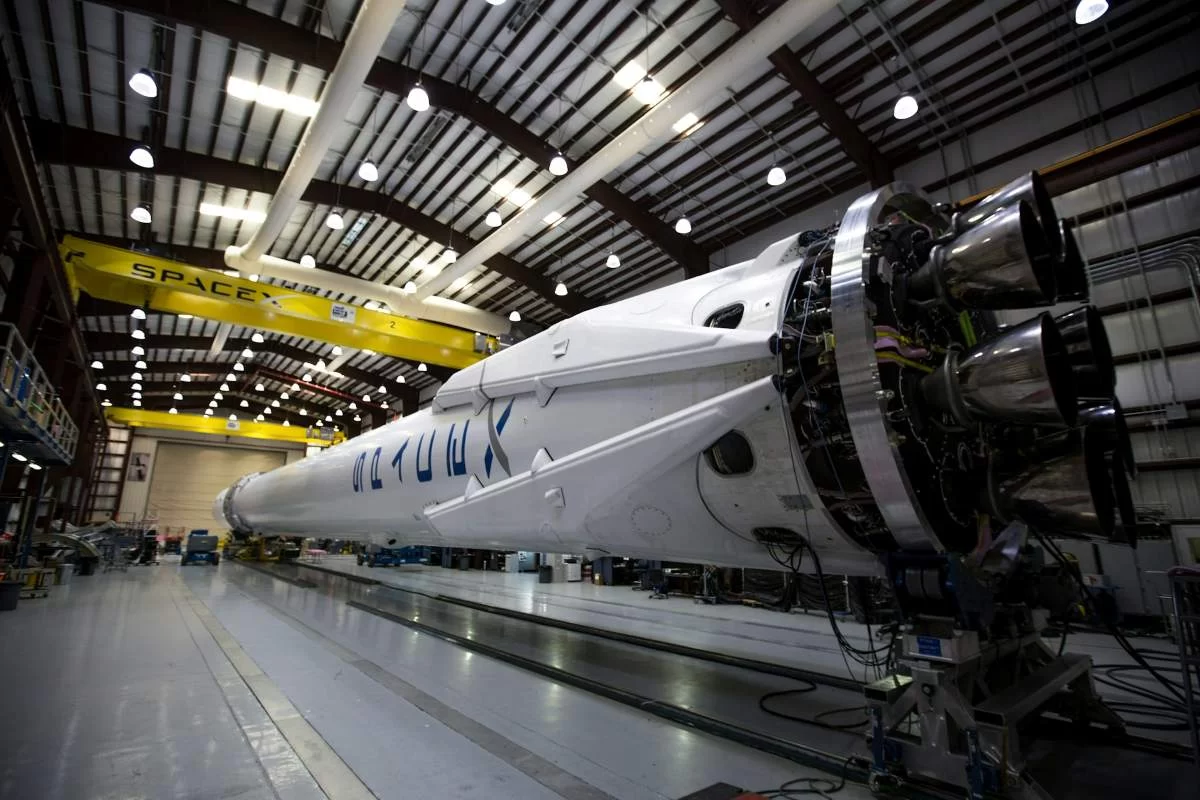
Aerospace company SpaceX has achieved a level of dominance that defies modern economic norms, currently launching nearly 80% of all payload sent into space and 94% of all launches from the United States (US). This grip on a strategic transport technology is almost without precedent in the last four centuries, echoing the era when the East India Company controlled global maritime trade routes.
The core findings of a new working paper by Dr Alessio Terzi, Bennett School of Public Policy, and Dr Stefano Marcuzzi, Centre for Higher Defence Studies (CASD), suggest that the space economy is rapidly reproducing the dynamics of the previous Age of Sail: a single dominant firm, weak international rules, and an intense rivalry between great powers that blurs the lines between public and private authority.
The problem is driven by the unique economics of reusable rockets, which have created a winner-takes-most market. Each successful mission allows SpaceX to become faster and more cost-effective, pushing competitors further to the periphery each year.
Simultaneously, the US is caught in a geopolitical trap. Curbing SpaceX would slow America down in the race with China, so no US administration has a strong incentive to do it. The same logic applied to the East India Company in its day.
Dr Terzi says the danger of this arrangement is that it erodes national power: “Governments depend on companies they cannot command in a field of relevance for national security. That isn’t sovereignty.”
History serves as a warning that governance often arrives too late, usually only after scandals or financial crises make the status quo impossible to ignore.
To prevent a similar century of corporate-led governance, the authors propose several urgent policy shifts.
The US should use its government purchasing power to write conditions regarding competition and data access into space contracts while public demand still carries weight. It is also essential to preserve backup options by maintaining alternative launch capacities before the dependence on a single provider becomes irreversible.
Beyond market competition, the research recommends placing public representatives on the boards of companies that manage critical infrastructure. This is particularly important as private decisions regarding safety zones on the Moon or resource claims could soon begin to look more like acts of government than simple business choices.
Dr Terzi and Dr Marcuzzi also suggest the government take limited public equity stakes in strategic firms—a move recently seen with Intel—to confer oversight rights without taking over management.
Finally, the US must coordinate with its Artemis allies to ensure the entire international bloc doesn’t end up depending on a single provider. The window to act is currently open, but history suggests it will not stay that way for long.
As Dr Terzi warns: “The East India Company took two centuries to bring under control. Space doesn’t have that long.”
The views and opinions expressed in this post are those of the author(s) and not necessarily those of the Bennett School of Public Policy.