The AI & Geopolitics Project (AIxGEO) at Cambridge University’s Bennett School of Public Policy has published its first anthology of essays challenging the narrative that AI is a zero-sum arms race between the US and China.
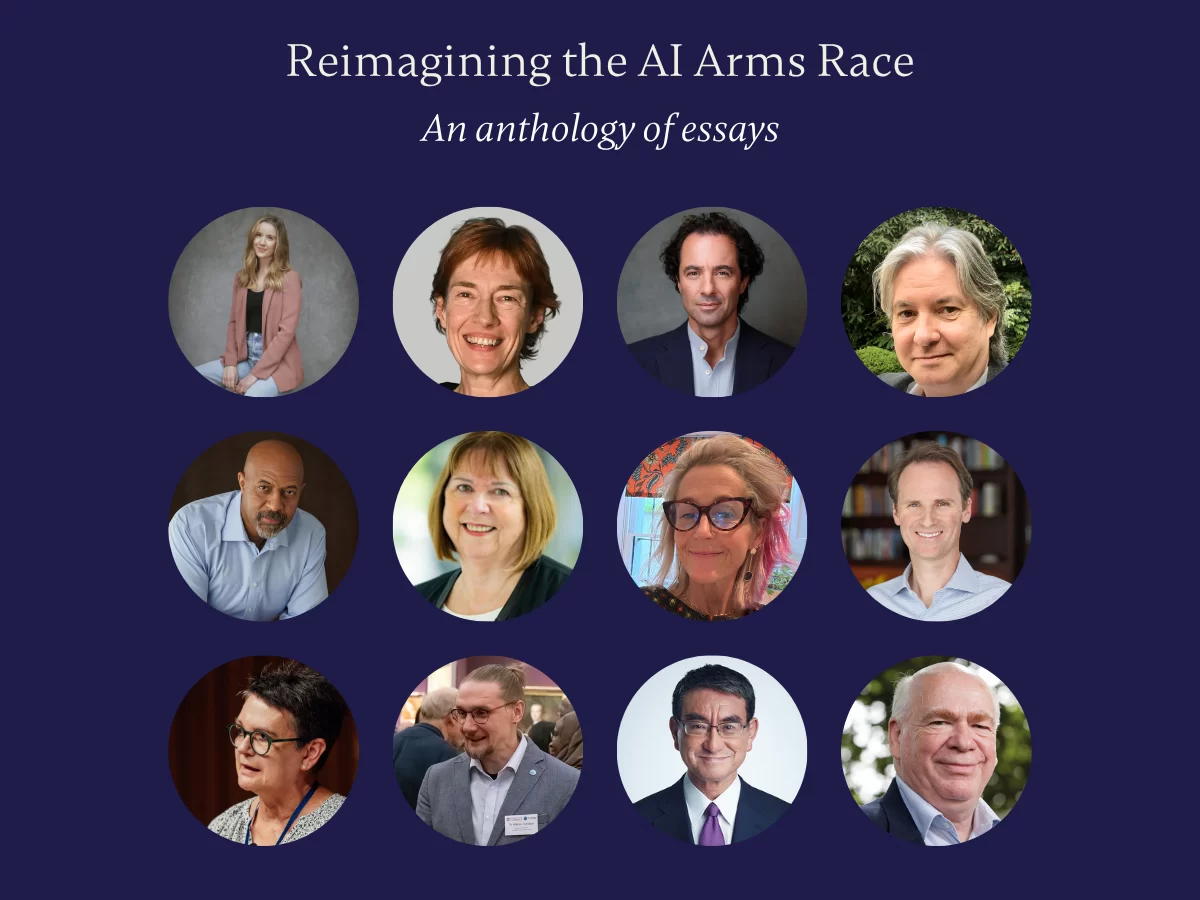
The idea that AI is an arms race between the US and China has taken hold of contemporary geopolitics. The AI & Geopolitics project (AIxGEO) addresses this framing in its first anthology of essays, Reimagining the AI Arms Race, exploring the limitations of the arms race metaphor and asking key questions about its origins and influence. This anthology brings together visionary thinkers, policymakers, and experts to challenge the narrative of AI as a zero-sum competition.
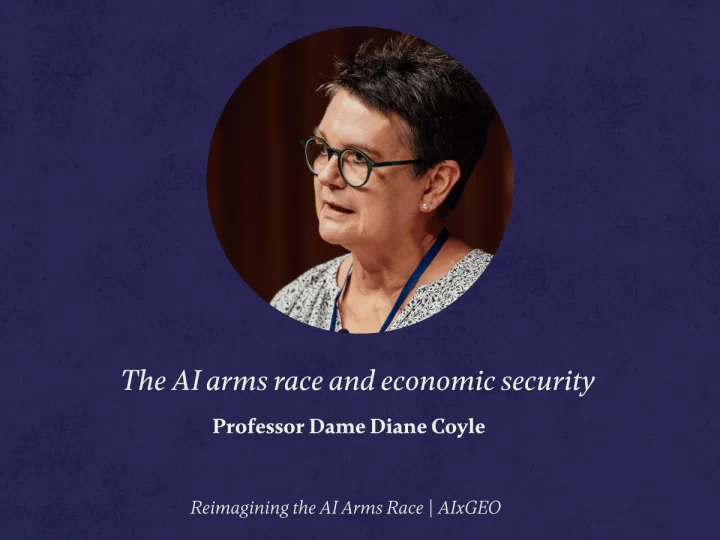
Drawing on diverse perspectives from diplomacy, philanthropy, civil rights, national security and economics, the collection features contributions from AIxGEO’s Director Verity Harding, Research Lead Aleksei Turobov and Bennett Professor of Public Policy Dame Diane Coyle, alongside figures including Sir Lawrence Freedman, Dame Wendy Hall, Baroness Martha Lane Fox, and former Japanese Foreign Minister KONO Taro.
The collection argues that reducing AI geopolitics to a race for technological supremacy risks obscuring the complex political, economic, and institutional realities that shape how the technology develops. The essays warn that the power of this framing lies less in whether it is accurate than in its ability to become self-fulfilling — narrowing political choices and risking the very values that competition is intended to protect.
Key arguments explored in the anthology:
- Verity Harding argues that competition between nations on AI is inevitable — but warns that framing it as an arms race can become actively counterproductive, encouraging nationalism, sidelining middle powers like the UK, and narrowing opportunities for collaboration.
- Sir Lawrence Freedman, Emeritus Professor of War Studies, at King’s College London, places the idea of an AI race in historical context, showing how states can end up locked in competitions driven as much by domestic pressures as genuine geopolitical necessity.
- Baroness Martha Lane Fox, cross-bench peer and digital entrepreneur, argues that focusing on “winning” AI distracts from what really matters: building institutions, safeguards, and public readiness to ensure the technology benefits society.
- KONO Taro, former Japanese Foreign Minister, uses Japan’s experience to warn how middle powers can lose influence if they become complacent about technological change.
- Anne Bouverot and Martin Tisné, Special Envoys for the Paris AI Summit, reject the race framing altogether, calling instead for AI policy focused on real-world outcomes and public benefit.
Read the anthology: Reimagining the AI Arms Race
This anthology is part of the Bennett School’s AI and Geopolitics Project (AIxGEO) – an initiative dedicated to a rights-based approach to AI and geopolitics, using research, convenings and wider communications to explore the geopolitics of artificial intelligence and challenge the narrative of an AI arms race.
The views and opinions expressed in this post are those of the author(s) and not necessarily those of the Bennett School of Public Policy.