The reappearance of the National Economic Council has attracted little attention compared to Andy Burnham’s wider constitutional agenda. But this unexpected institutional revival reveals much about the new government’s emerging approach to devolution and the future of the Union, write Peter Hourston and Prof Michael Kenny.
Andy Burnham entered government with clear views on the need for greater devolution in England and the vital role of mayor-led Strategic Authorities for his regional growth agenda. But the prime minister’s handling of the devolved governments in Scotland, Wales and Northern Ireland has, as yet, been much less assured.
The political context he faces outside England is a volatile and challenging one. For the first time, the largest parties in Holyrood, the Senedd and at Stormont are all committed to leaving the Union, and their leaders have made a public show of coming together to proclaim their shared objective of breaking up the UK.
Despite the underlying tension between the UK and devolved governments created by the latter’s constitutional ambitions, today’s meeting with the Prime Minister, First Ministers of Scotland and Wales and senior civil servants representing the Northern Ireland Executive may reflect the desire to take a more strategic approach on the part of the Burnham government to this challenging context.
Why host a ‘National Economic Council’?
The new prime minister has chosen to gather the leaders of the devolved governments under the aegis of an institutional vehicle, the National Economic Council (NEC), which has not formally existed for 16 years.
Rather strikingly, the last time this body met regularly was in the aftermath of the banking and financial crises of 2007, when it was created by Burnham’s former boss, Gordon Brown. Its core purpose was to marshal the resources of, and set the direction for, the government’s response to the global financial crisis and subsequent recession.
Key strategic debates and decisions took place at NEC meetings, with Whitehall departments held to account for agreed actions. Brown also used it to strengthen No.10’s grip on economic policy.
For a Prime Minister who is committed to passing power out of Whitehall through further devolution, the restoration of the NEC comes as something of a surprise. However, the NEC on Burnham’s watch will be a very different beast from the one chaired by Brown.
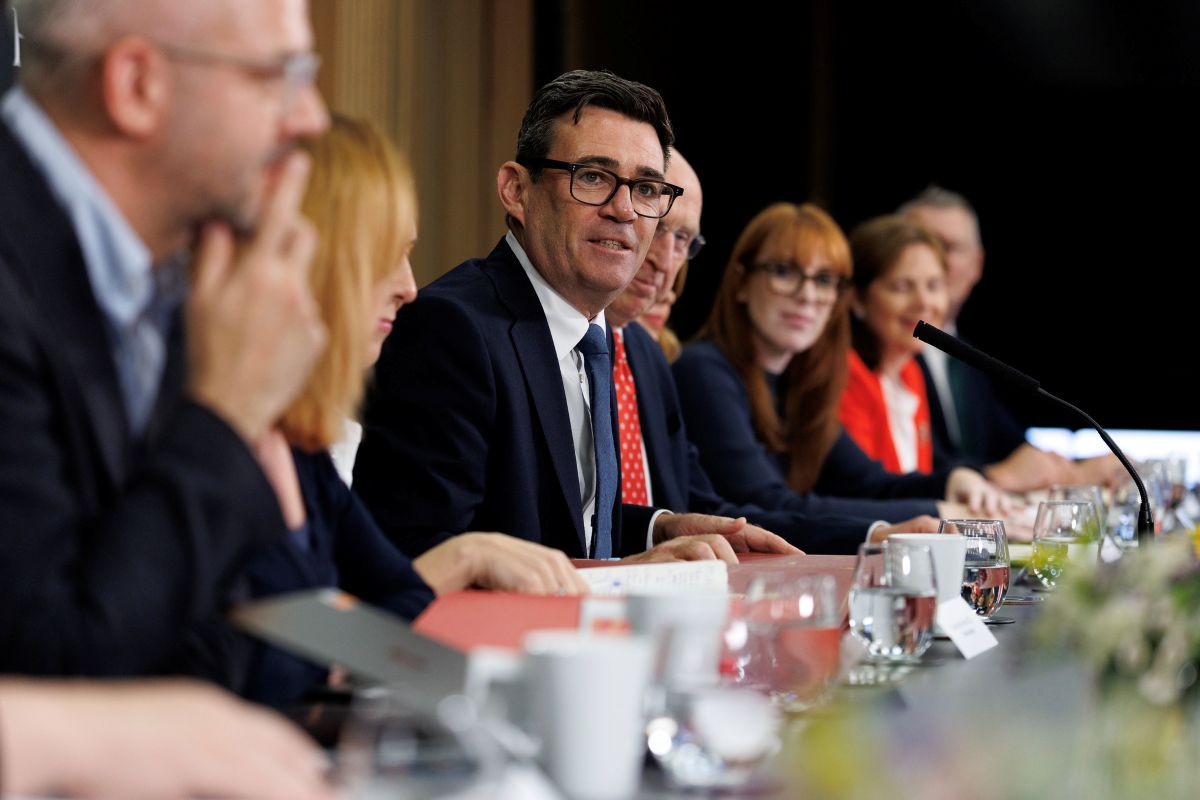
While the NEC has a fixed, core membership, including the Prime Minister, Chancellor and First Secretary of State, its meetings have included various invited guests, depending on the issue being considered. At the very first meeting of Burnham’s NEC, he gathered the 14 English regional mayors at No10 North in Manchester. And there is an interesting parallel here with how Burnham used his convening power as Mayor to bring together different groups of stakeholders around his priorities in Greater Manchester.
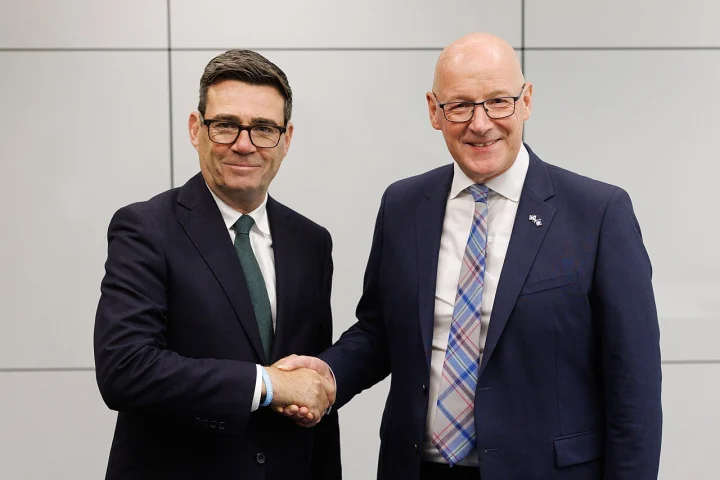
Today’s meeting is striking in that it is taking place in Glasgow, not Manchester, and involves eight senior UK government ministers and representatives from the devolved governments. Burnham is also due to have bilateral meetings with his counterparts in Scotland and Wales, John Swinney and Rhun ap Iorwerth. The main point on the agenda is the idea of greater regional devolution for all parts of the UK, which Burnham aired in his speech in Motherwell earlier this month.
The NEC is the latest addition to the British model of intergovernmental relations
This revived, and reinvented, NEC is the latest addition to the increasingly cluttered institutional landscape associated with intergovernmental relations. As previous Bennett School research has shown, the UK has long struggled to develop effective mechanisms for collaboration between Whitehall and the devolved governments.
Brexit and the Covid-19 pandemic exposed the limitations of the joint ministerial committee mechanism, which had become little more than an opportunity for the airing of grievances by the devolved leaders. The four governments agreed in 2022 to create an entirely new structure for inter-government relations which included a hierarchy of interministerial forums and a council bringing together the prime minister and heads of the devolved governments. Following Keir Starmer’s election victory in 2024, the Council of Nations and Regions (CNR) — another new vehicle for engaging the leaders of these governments (and England’s elected mayors) — was established to great fanfare.
Two aspects of the NEC are particularly revealing about how the Burnham government is approaching the challenges of intergovernmental relations. First, it is officially a cabinet committee, and this gives the NEC added weight in Whitehall.
And, second, inviting devolved leaders into a cabinet committee is an important way of bringing the views of these other governments into the heart of British policymaking. Yet it may also represent a shift away from the more consultative ethos associated with Starmer’s Council, giving the Prime Minister much more control over the determination of the new Council’s agenda.
At its most basic level, this meeting also gives the prime minister a handy photo opportunity with these leaders, enabling him to signal his commitment to taking devolution seriously.
The IGR machinery established in 2022 continues to roll forward, although reports from its various forums suggest that it is variable in terms of its efficacy. But the shift from the CNR model created by Starmer is important and telling.
Burnham’s approach to the NEC will be an important element in his government’s wider “territorial management”
Beyond delicate choices about how and when to meet devolved leaders, there are deeper challenges which Burnham will need to face in the near term and in relation to his government’s ambitious 10-year plan for Britain.
In the short-term, the fallout from Drumcree, which meant that Northern Ireland’s First Minister Michelle O’Neill and deputy First Minister Emma Little-Pengelly did not attend today’s NEC meeting, needs to be treated with considerable care by the UK Government. High political and community tensions point to a potentially perilous new phase in the story of devolution to Stormont and a growing risk that the Executive will be collapsed once more. The lack of political representation from Northern Ireland at the NEC restricts its effectiveness as a truly intergovernmental body.
More generally, little thought seems to have been given, as yet, to the implications for Scotland, Wales and Northern Ireland that arise from Burnham’s ambitions to extend devolution in England. Additional fiscal devolution to English regions, and in particular the idea for income tax retention for mayoral authorities, are bound to have repercussions for the financial settlements of the devolved governments and could well generate future conflicts.
The Prime Minister’s commitment to both devolution and the Union are not in any doubt. But to position himself as the champion both, Burnham will need to develop a strategy that brings together central and devolved governments within a broader vision of a more collaborative UK polity and which blunts the appeal of nationalist parties in all its parts.
Image: Prime Minister Andy Burnham speaks to staff as he spends his first day working in No10 North office in Manchester. Picture by Lauren Hurley / No 10 Downing Street. CC BY-NC-ND 4.0
The views and opinions expressed in this post are those of the author(s) and not necessarily those of the Bennett School of Public Policy.